

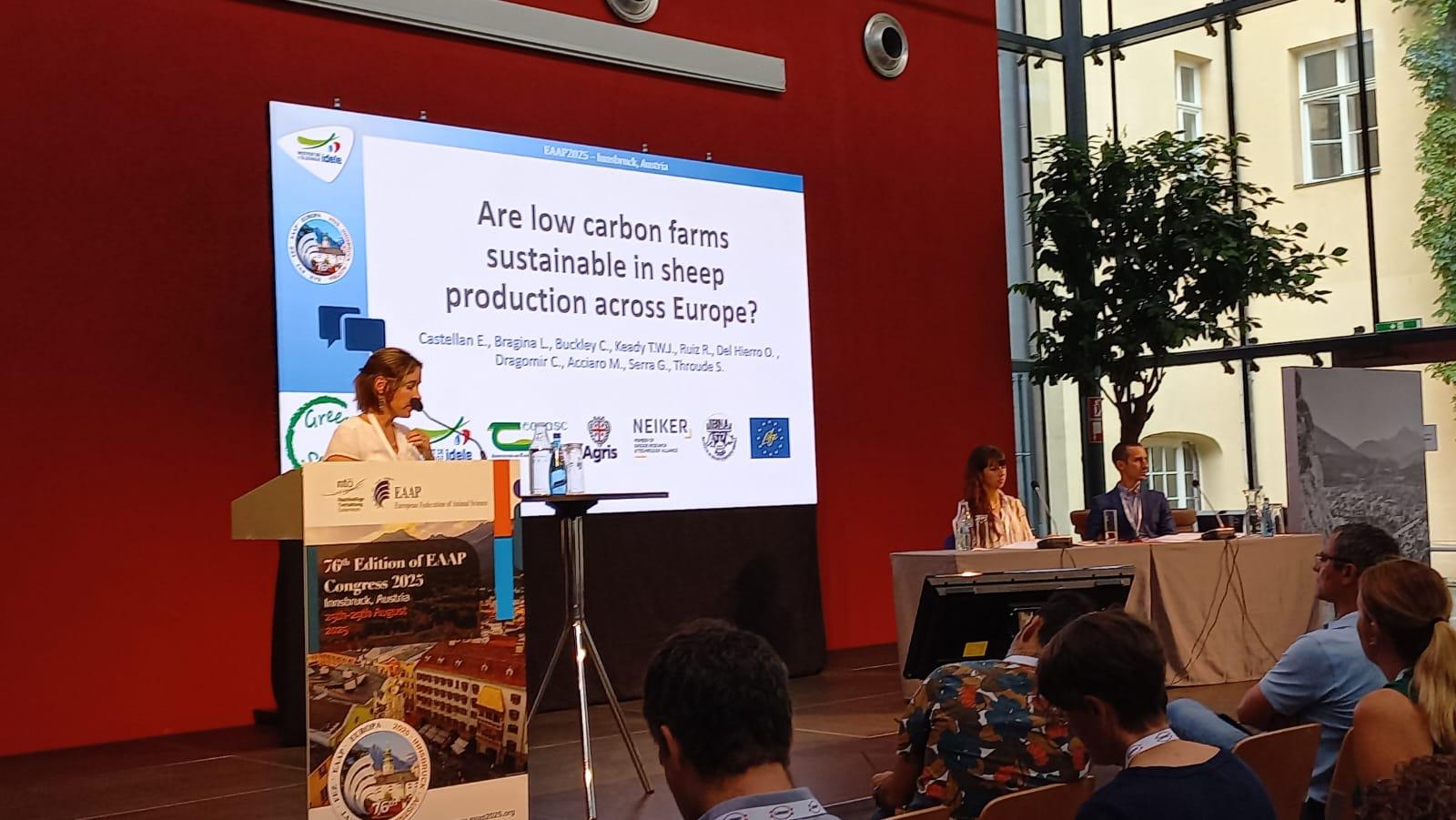
“¿Está la mejora de la huella de carbono (HC) de las ganaderías ovinas positivamente relacionada con la sostenibilidad general de la granja?” Uno de los objetivos del proyecto LIFE Green Sheep es monitorizar los rebaños de ovino en cinco países para evaluar su HC e indicadores de sostenibilidad (medio ambiente, economía, social). El proyecto involucra a 1.284 rebaños demostrativos, que se someten a una evaluación inicial ambiental y de sostenibilidad, y 260 rebaños innovadores, que tienen evaluaciones y monitorizaciones más profundas. Para la evaluación de la sostenibilidad, cada pilar (es decir, el medio ambiente) se define por varios problemas (es decir, el impacto climático), que luego se traducen en indicadores (es decir, la emisión de GEI). Se utilizan referencias locales para clasificar cada indicador en una escala del uno al cinco. No se aplica ponderación a los indicadores. La matriz de sostenibilidad incluye 18 indicadores para las ganaderías demostrativas y 33 para las innovadoras. Como los resultados son divergentes, la atención se centra en las innovadoras. Las mejores ganaderías para los resultados de HC (denominadas ‘top’) son aquellas con una clasificación de cinco para las emisiones de GEI por unidad funcional (UF). Para las lecheras, las granjas top tienen la misma clasificación en los pilares ambiental y social que la media, mientras que su clasificación económica es inferior. Una evaluación de los detalles de la clasificación de los parámetros dentro de cada pilar muestra que las principales diferencias negativas se encuentran en la eficiencia del sistema y la contribución al empleo. Para los rebaños de carne, las ganaderías top tienen una clasificación social más alta que la media, mientras que lo contrario es cierto para los otros dos pilares. Para el pilar social, las granjas top tienen una mejor clasificación en los parámetros de servicios al territorio y calidad de la producción. Por el contrario, tienen una clasificación más baja en los dos parámetros económicos, y en el pilar ambiental, dos de cada cinco parámetros son negativos. Los resultados preliminares muestran que la sostenibilidad es una evaluación multifactorial, e incluso dentro del pilar ambiental, los GEI son solo uno de los problemas.