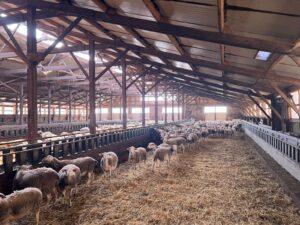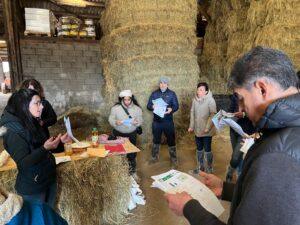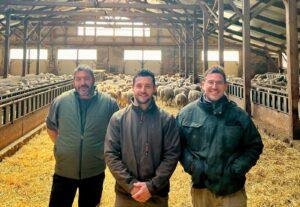


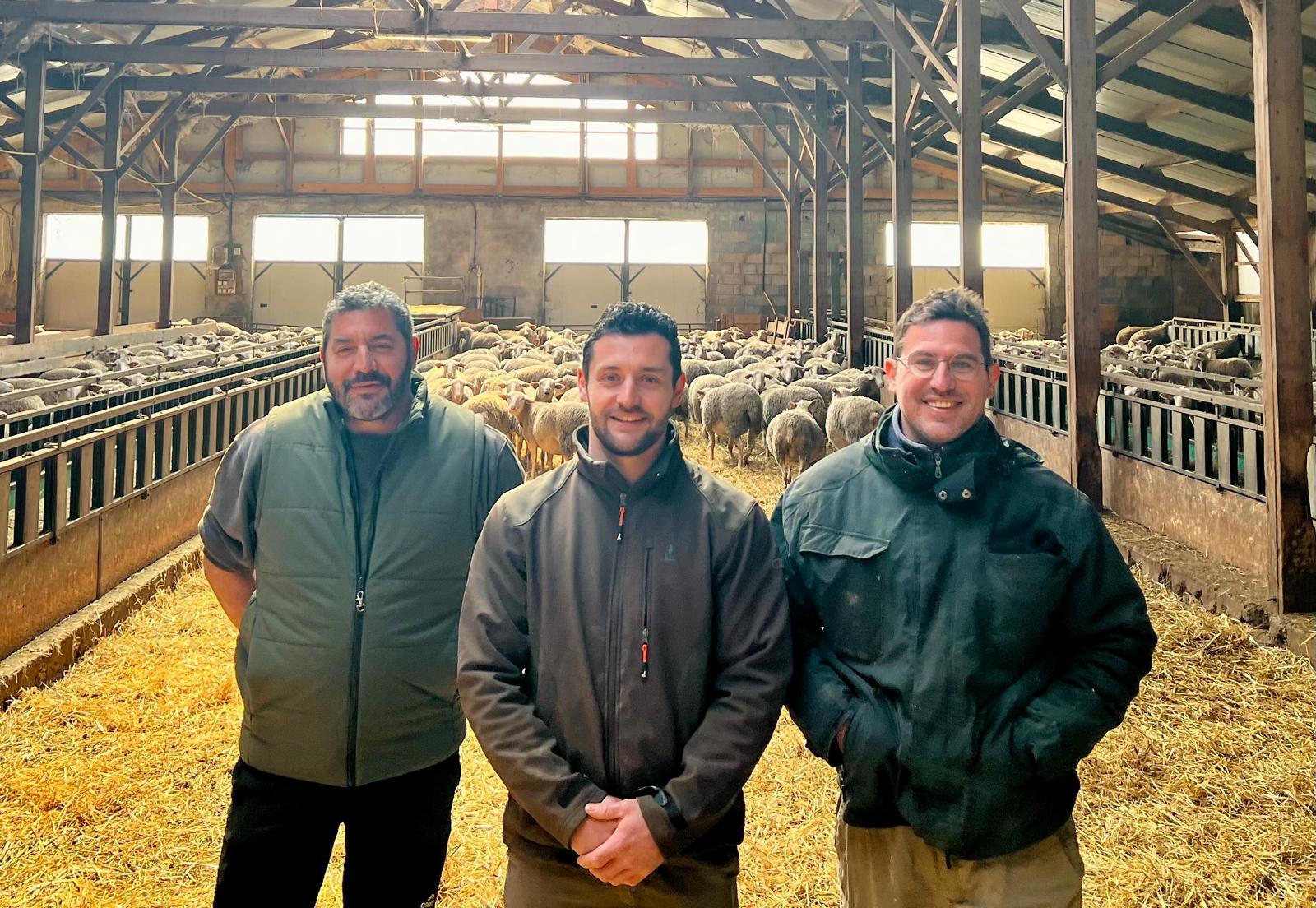
On 19 March 2026, the partners of LIFE GREEN SHEEP had the opportunity to visit GAEC Moulin du Tironant during their 9th European Steering Committee, held in the north of the Hérault region, near the Aveyron border. The farm run by Théo Albaniac and his two partners provides a clear illustration of how sustainable sheep farming can successfully combine technical performance with environmental performance.
From the outset, Théo aimed to improve technical results that were hindered by low prolificacy and high lamb mortality. Initial decisions were made, including the purchase of additional hectares and a change of breed.
In 2021, a CAP’2ER® environmental assessment, carried out with Marion Guibert, sheep farming advisor at the Natera cooperative, confirmed the relevance of these developments and helped identify several levers combining environmental and technical performance: a gradual shift from Blanche du Massif Central (BMC) sheep to Lacaune meat sheep, improvements in ewe nutrition—particularly before lambing—through the introduction of legumes, increased lamb monitoring, and efforts to expand grazing, despite the challenges posed by climate change and recurring summer droughts.
Four years later, the results are convincing: a 6% reduction in greenhouse gas emissions per lamb, improved lamb conformation and weight (+1 kg per carcass on average), and a reduction in inputs (–15 kg of feed per ewe on average). The partners continue to work on the transition of their flock to the Lacaune breed, with the objective of further increasing prolificacy.
This example demonstrates that optimising livestock farming practices is a key lever of the agroecological transition, at the heart of the commitments of the LIFE GREEN SHEEP programme.
Thanks to Daphnée Séailles, Editor-in-Chief of Pâtre, the magazine for sheep farmers, for the information. The full article can be found in the July–August issue of Pâtre.