


El 20 de enero de 2026, el proyecto europeo LIFE Green Sheep organizó un seminario web que reunió a investigadores, asesores, ganaderos y partes interesadas del sector ovino para presentar soluciones prácticas destinadas a reducir la huella de carbono de la cría de ovejas, reforzando al mismo tiempo su sostenibilidad global. El evento destacó tanto los progresos del proyecto como ejemplos concretos de explotaciones en Italia y Rumanía. Participaron alrededor de 50 personas.
Coordinado por el Instituto Ganadero Francés (Idele), LIFE Green Sheep tiene como objetivo reducir la huella de carbono de la producción de carne y leche de oveja en un 12% en toda Europa. El proyecto involucra a cinco países (Francia, Irlanda, España, Italia y Rumanía) que, en conjunto, representan casi la mitad de la producción europea de carne de ovino y más del 60% de la producción de leche de oveja. Participan más de 1.500 explotaciones ovinas, incluidas 261 explotaciones innovadoras que aplican planes de acción de carbono a medida.
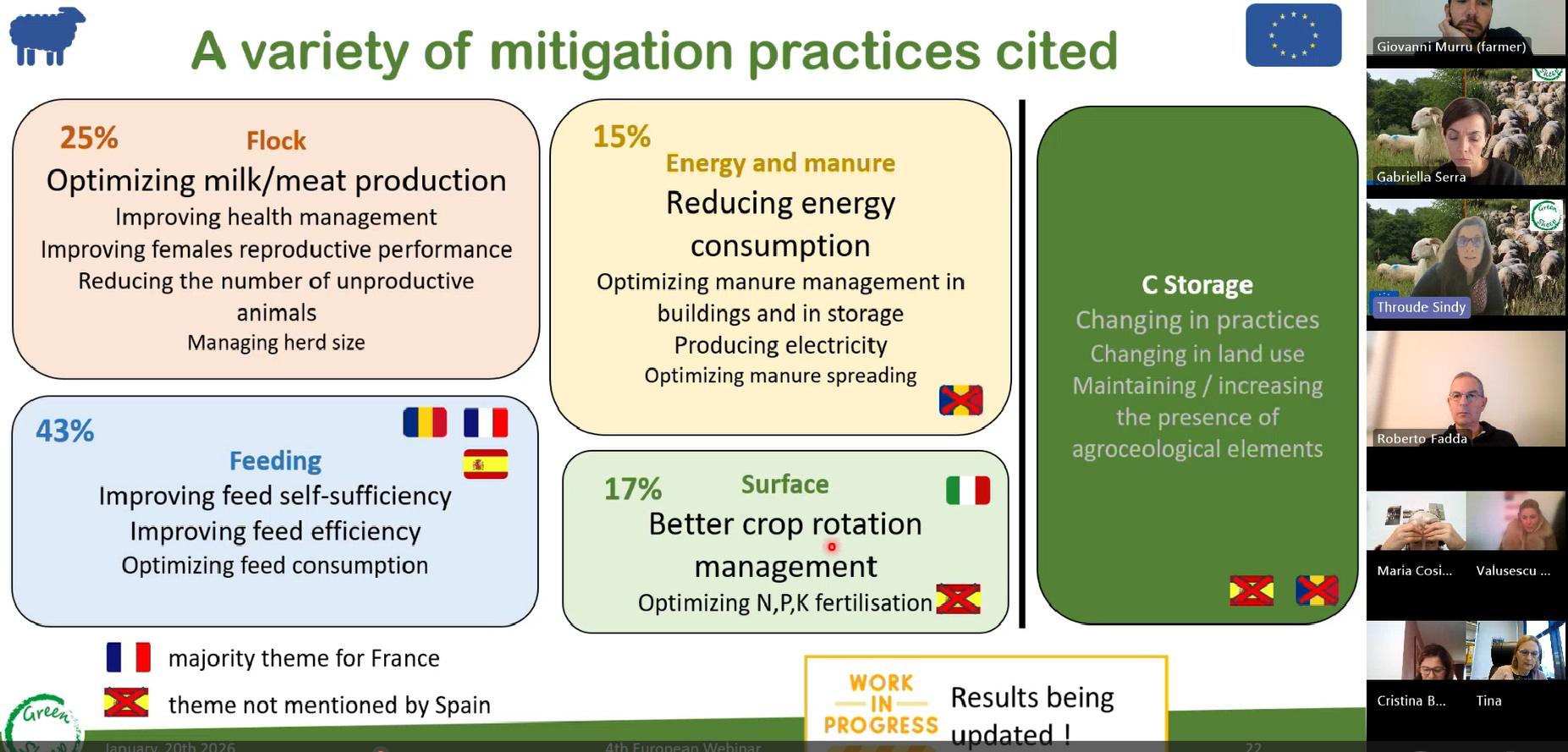
Durante el seminario web, la responsable del proyecto, Sindy Throude, presentó los principales resultados intermedios. Un análisis de más de 200 planes de acción de carbono reveló que las estrategias de mitigación difieren según los sistemas de producción. En las explotaciones de ovino de carne, las principales palancas se refieren a la gestión del rebaño, especialmente la sanidad animal y la productividad. En las explotaciones de ovino de leche, la gestión de la alimentación es el factor dominante para reducir las emisiones. Los resultados de las simulaciones muestran que estos planes de acción pueden lograr reducciones de emisiones cercanas a los objetivos del proyecto, lo que confirma su relevancia técnica.
Dos estudios de caso ilustraron cómo se aplican estas estrategias en la práctica. En Italia, una explotación de ovino de leche en Cerdeña demostró cómo la combinación de una alta autosuficiencia forrajera, el almacenamiento de carbono a través de pastizales permanentes y maquinaria innovadora de construcción propia puede mejorar tanto el desempeño ambiental como las condiciones de trabajo. Inversiones sencillas pero ingeniosas en equipos de alimentación y lecho redujeron significativamente el tiempo de trabajo y el esfuerzo físico, destacando la importancia de la sostenibilidad social junto con los objetivos ambientales.
En Rumanía, la explotación de bajos insumos presentada mostró que los sistemas extensivos también pueden lograr beneficios climáticos sustanciales. Medidas como la mejora de la gestión de los pastos, la introducción de leguminosas, la reducción de la proporción de animales de baja productividad y una mejor gestión de los corderos permitieron una reducción estimada del 17% en las emisiones de gases de efecto invernadero, superando el objetivo del proyecto. Al mismo tiempo, se reforzaron la eficiencia y la resiliencia económica de la explotación.
En general, el seminario web demostró que la transición hacia una ganadería ovina baja en carbono es factible en contextos muy diversos. Al combinar enfoques técnicos, ambientales, económicos y sociales, LIFE Green Sheep demuestra que la ganadería ovina sostenible puede ser respetuosa con el clima y estar centrada en el ganadero, ofreciendo vías realistas para el futuro del sector.
Ver la presentación LIFE_GREEN_SHEEP_EU_WEBINAR_20260120
Ver la grabación del seminario web