

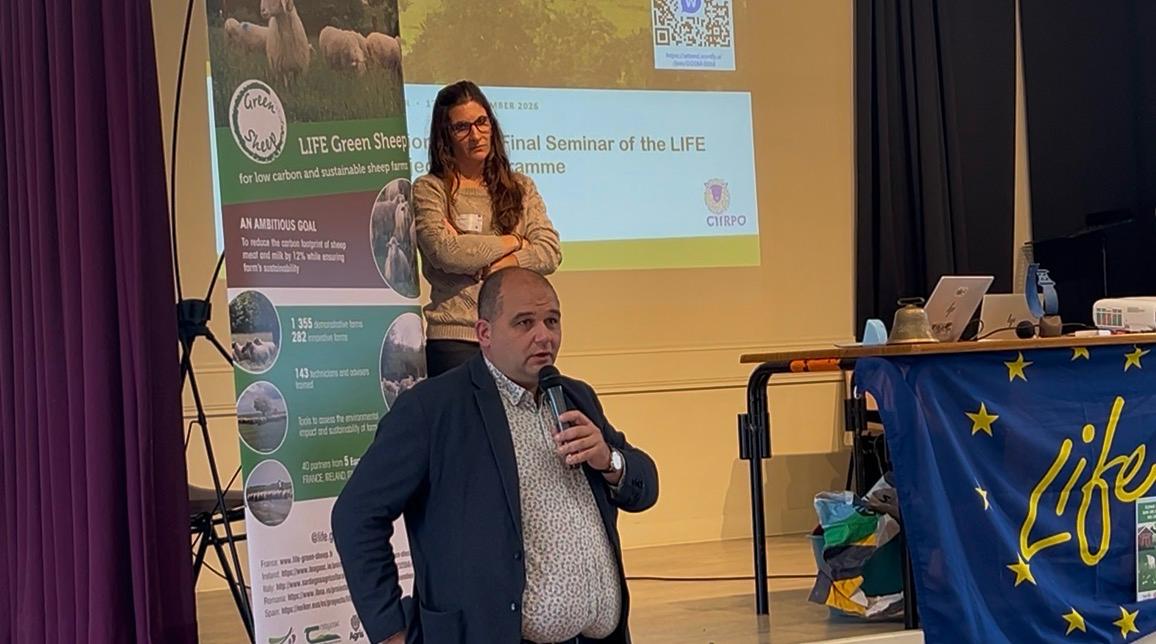
The European LIFE Green Sheep project has met its target: the net carbon footprint of participating farms fell by 28.7% on dairy sheep farms and 12.4% on meat sheep farms. Its final seminar brought together farmers, advisors, researchers, teachers and sector representatives from France, Ireland, Spain, Italy and Romania, as well as Belgium, Morocco and Angola: 69 participants from eight countries, 43 of them from France, on 17 and 18 November 2026 in Haute-Vienne, France.
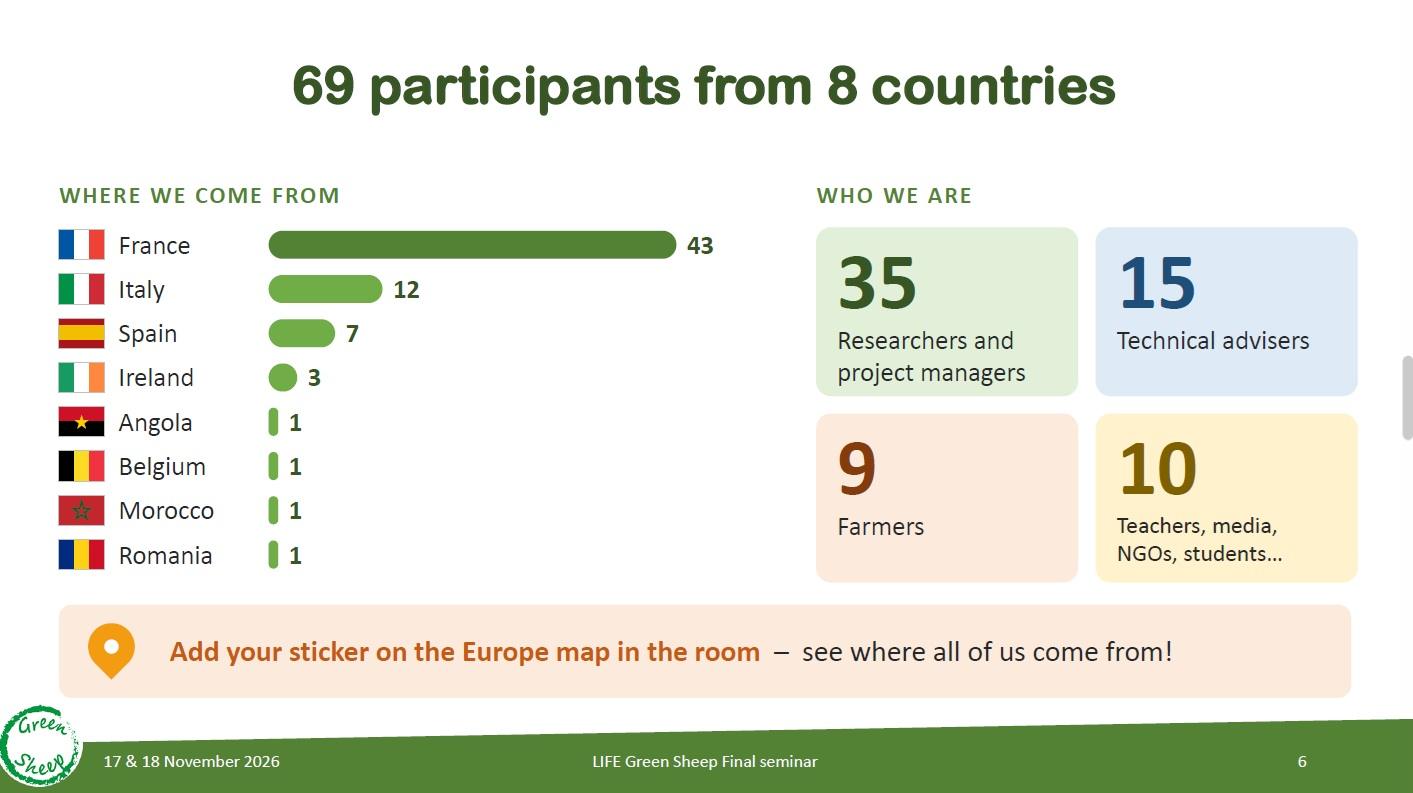
The participants: 35 researchers and project managers, 15 technical advisors, 9 farmers, 10 teachers, media, NGOs and students.
The programme alternated between the field and the meeting room: La Faye farm (Saint-Yrieix-la-Perche agricultural high school) on Tuesday morning, plenary sessions in Saint-Priest-Ligoure, then the Le Mourier experimental farm (CIIRPO) on Wednesday afternoon. Simultaneous translation was provided through the Wordly app.
| The project in figures | |
| Duration | 2020-2026 (six years) |
| Coordinator | Idele (French Livestock Institute) |
| Partner countries | France, Ireland, Spain, Italy, Romania |
| Share of the EU total for the 5 countries | 47% of sheep meat, 63% of sheep milk |
| Farmers involved | more than 1,500 |
| Farms assessed | 1,284 |
| Innovative farms with a carbon action plan | 261 |
| Advisors trained | more than 150 |
| Target | -12% carbon footprint of sheep milk and meat |
Tuesday morning: La Faye farm
The seminar opened on the farm of the Saint-Yrieix-la-Perche agricultural high school, a working farm that also serves as a teaching tool for students. It covers 220 hectares of grassland and crops, with about 120 Limousin cows and 105 calves, and a flock of around 180 to 200 meat ewes (Vendéen, Charolais, Suffolk crossed with Limousin) under the Label Rouge quality scheme. It also grows 10 hectares of PDO Limousin apples and 4 hectares of chestnuts, partly organic.
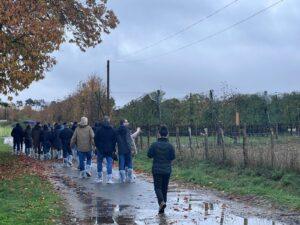
The visit showed a farm already well into the transition:
- Hedges and agroforestry: a hedge replanting programme across all fields, and an agroforestry chestnut plot to study how trees and grazing work together.
- Grazed orchards: ewes graze the organic orchards, with care taken over copper treatments.
- Adapting to drought: new water troughs and re-dug wells; with no grass left, the ewes had to be housed from September. Lambing was difficult, with heavy lamb losses.
- Public image: ewes kept near hiking trails to show livestock farming to the public.
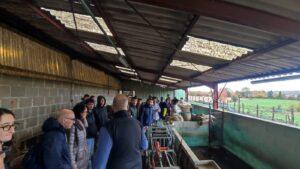
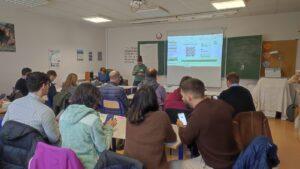
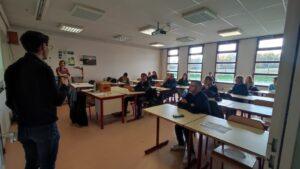
Participants then split into three rotating 25-minute workshops:
- Teaching: with a teacher and students, how to address climate change mitigation and adaptation in the classroom, and what LIFE Green Sheep brings to agricultural education. 2_Workshop_1_Teaching climate change
- Flock management: results of the sheep unit’s CAP’2ER assessment (16% of emissions offset by carbon storage), difficulties caused by bluetongue in 2024 and by housing conditions, and possible levers: mortality, replacement, genetics.4_Workshop_3_From diagnosis to action_Flock management mitigation practices
- Agronomy and carbon storage: what the farm does (hedges, cover crops, tillage, legumes), followed by a discussion ranking practices by cost and workload. 3_Workshop_2_From diagnosis to action_Forage and agronomy mitigation practices
Tuesday afternoon: the project and its results
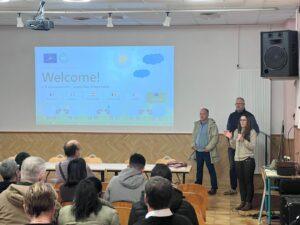
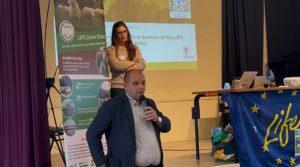
Opening. A french sector representative, Guillaume Metz, President/Chairman of Interbev Nouvelle Aquitaine and President/Chairman of Le Mourier Farm, welcomed participants to Haute-Vienne, a sheep and cattle farming area.
The European context. A European Commission representative, Valéria Forlin, presented, by video link, the EU carbon removals certification regulation (carbon farming), adopted in December 2024. Its first methodologies cover agroforestry and soil carbon storage; for livestock, carbon storage in grassland is what counts first. Livestock emissions are not yet within its scope: an amendment is being prepared, with a methodology update expected in 2028 at the earliest. The Commission also wants to build up demand, which is weak today, by bringing credit buyers together.
The project and the sectors. Idele recalled the project’s five actions: harmonise assessment tools, train advisors, set up a network of demonstration farms (references) and innovative farms (carbon action plans), create a European observatory, and train future generations. Each country presented its sheep sector:
- PRESENTATION : 3_Overview of the LIFE Green Sheep Project

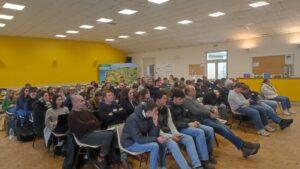
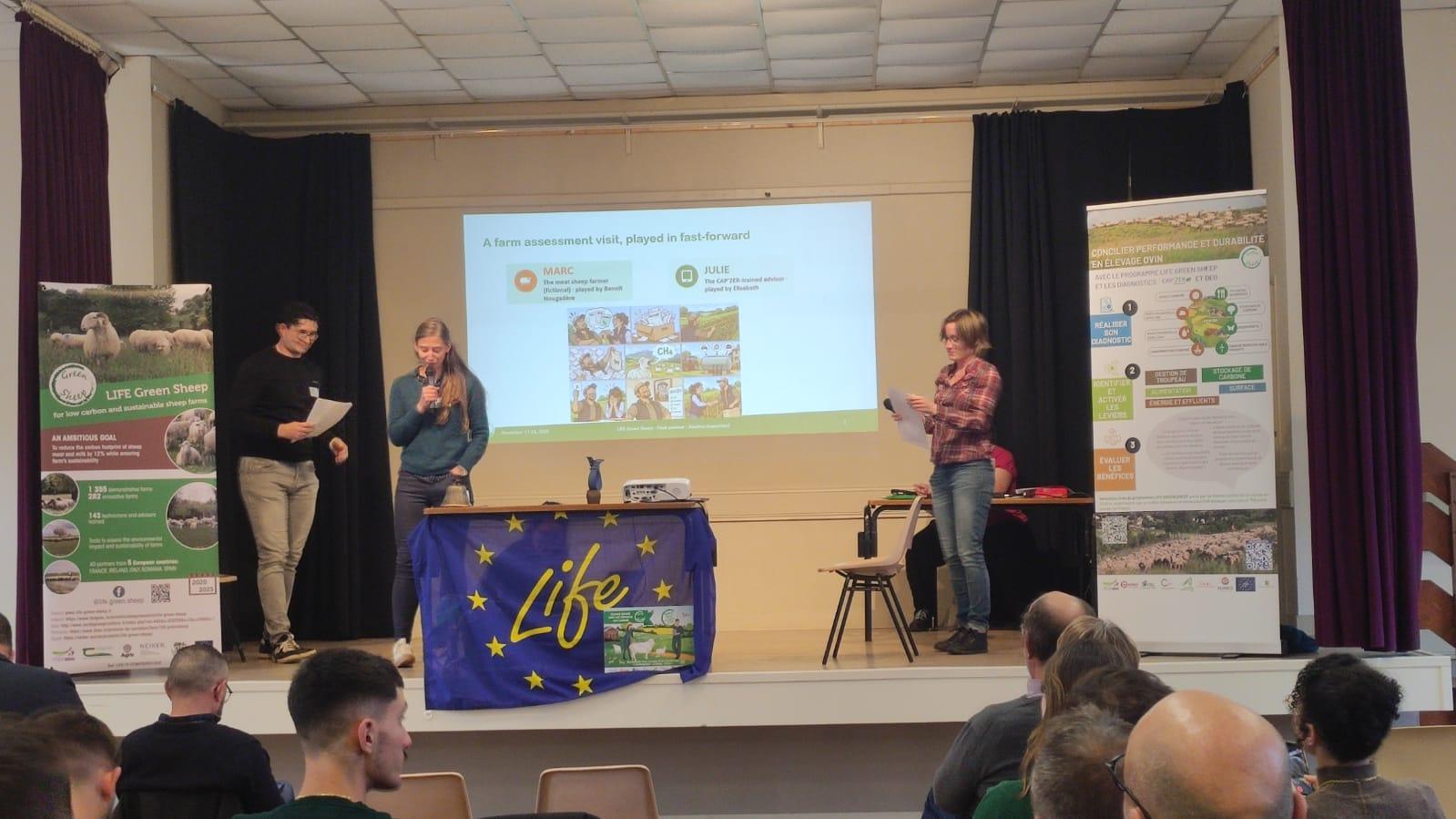
An assessment played on stage. The sketch «Another inspection?» featured Marc, a wary sheep farmer with his shoebox full of invoices, and Julie, a CAP’2ER-trained advisor. It showed the data collected, the difficulties met in the field and how an action plan is built, with extracts from real reports and a quiz for the audience.
PRESENTATION : 4_How to carry out an environmental assessment
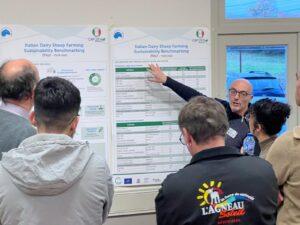
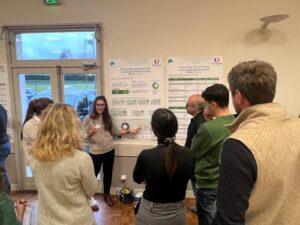
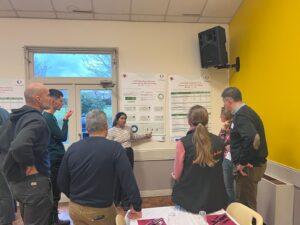
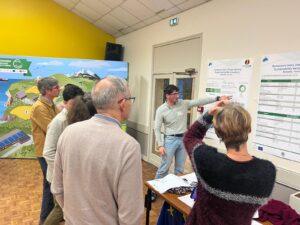
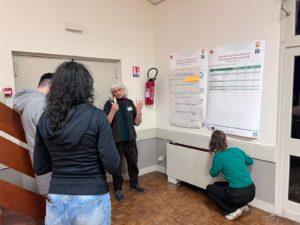
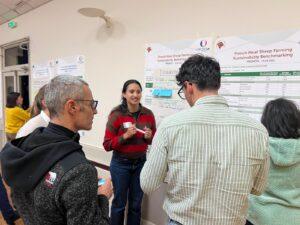
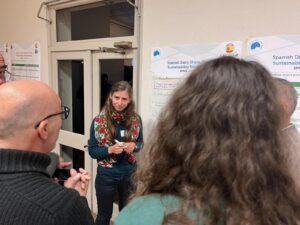
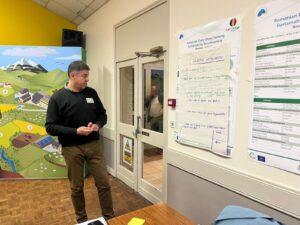
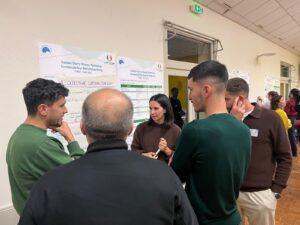
The European observatory. During a poster session, national leaders presented results by country and by system. Main finding: variability in emissions is greater within a system than between systems. Enteric fermentation accounts for 51% of emissions on dairy sheep farms and 61% on meat sheep farms, followed by manure management.
PRESENTATION : 5_Determining environmental and sustainability performances of sheep farms in Europe
- FRANCE
- 2026 Poster GreenSheep_Meat FRENCH
- 2026 Poster GreenSheep_Dairy FRENCH
- SPAIN
- 2026 Poster GreenSheep_Dairy SPANISH
- 2026 Poster GreenSheep_Dairy SPANISH
- ITALY
- 2026 Poster GreenSheep_Dairy ITALY
- IRELAND
- 2026 Poster GreenSheep_Meat IRELAND
- ROUMANIE
- 2026 Poster GreenSheep_Dairy ROMANIA
The innovative farms. The 261 innovative farms aimed for -12% (against -5% for demonstration farms). Nearly 200 practices were implemented on dairy sheep farms, mainly on feeding (optimising concentrates); 40% of practices concern flock management, on meat farms mainly health and lamb mortality. Several case studies illustrated these results, for example:
PRESENTATION : 6_Mitigation Strategies to Reduce the Carbon Footprint of European Sheep Production
The -12% target is met for the net footprint. The gross footprint fell less, for three reasons: poor-quality forage harvested in 2023 and fed in 2024, bluetongue which cut meat output, and a three-year period too short to see every effect. Key message: the aim is not to change everything but to optimise; good technical results bring good environmental results, and there is no one-size-fits-all solution.
Tuesday evening: collective capitalisation
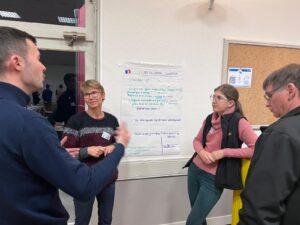
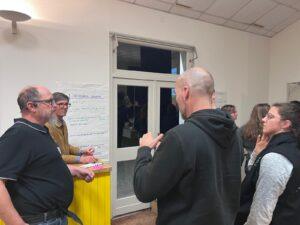
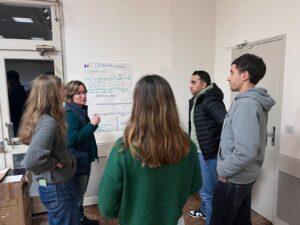
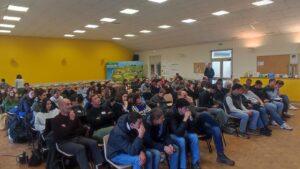
At the end of the day, participants drew their own conclusions in small groups around ten flipcharts (seven in English, three in French), followed by a one-minute report from each group.
What we learned: eight key messages.
- Diversity everywhere: high variability within and between systems, big differences in concentrate use, yet little difference in net footprint between countries.
- Mitigation works: reduction is possible everywhere with simple solutions, but it takes time and depends on weather and animal health.
- Efficiency first, then autonomy: the first lever is efficiency (CO2e per kg), the second is less dependence on inputs (CO2e per hectare).
- Adaptation too: systems must adapt to climate change, which can itself encourage the use of these tools.
- Data and units matter: primary data is hard to gather, units affect the conclusions, and results are hard to promote.
- Good tools, good advice: tools to improve, and advice that helps farmers know their key points and set objectives.
- Learning from others: discovering farms in other countries, seeing La Faye farm on the ground.
- A whole-system view: the link between environment and economics strengthens the sector, to produce more and better.
The mood was mainly optimistic: pride in the work done, relief at meeting the targets, curiosity and a wish to go further. Participants remain clear-eyed: the less engaged farmers must now be reached, and the future of the assessments is uncertain. Some described themselves as «exhausted but happy», a little sad that the project is ending.
For their organisations, the assessment is a way in to talk about the environment with farmers and an extra argument for technical and economic advice: sustainable means higher income. It brings proven indicators, an observatory to benchmark against, and a systemic approach that brings advisors, students and farmers together. Questions remain open: should organisations keep investing in these tools, and how can downstream buyers be prevented from using them to push prices down?

What participants will do, their needs and their offers:
| I will… | Needs | Offers |
| Communicate at every level: seminars, social media, farm press, through relays and ambassadors | Funding for assessments, advice and paying farmers (through product prices or carbon credits: no consensus) | Analyses by researchers and technicians, knowledge of mitigation practices |
| Inform cooperatives and farmers directly; open days, a national meeting in Spain | Fresh data and longer trials given variability, drought and bluetongue | Free real-time online tools, with training |
| Build the assessment into technical advice, to keep advisors’ expertise even without new funding | Clear carbon credit rules for small ruminants, a better definition of emission sources | Pilot farms to test practices |
| Keep going: more data, more farmers, other countries, an improved CAP’2ER | Simpler tools, assessments without extra pressure on farmers | Technical advice for advisors, farmers and students |
| Build stronger arguments on enteric methane, the positive contributions of livestock farming, genetics | Work on adaptation, with the support of regional policymakers | A resource website on mitigation practices, country fact sheets, new joint projects |
The summary presented on Wednesday morning: what participants will do, their needs and their offers.
One sentence summed up the reports: «everyone has the same answer: communication». One group added a limit: you cannot talk to farmers about the environment without talking about economics, because they need to make a living.
——————————————————————————————————————————————————————————–
Wednesday morning: lessons, outlook and the young generation
The morning opened with a recap of the previous day’s messages,
- PRESENTATION : Introduction and capitalisation
followed by the project’s lessons learnt, presented by Roberto Ruiz (Neiker).
Lessons on tools and training. A carbon calculator is not enough. What is needed is harmonised methods rather than a single piece of software, and tools built into existing advisory services that become decision-support tools. Emission reduction must be linked to productivity and economics, with simple, reliable data. National tools give different figures but point to the same priority sources, first among them enteric fermentation. On training: build a common language, explain why a practice works, and rely on results from real farms.
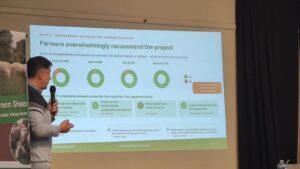
The survey of farmers and advisors. 356 people answered in spring 2026 across five countries (227 in France, 99 in Spain, 20 in Italy, 10 in Romania, 1 in Ireland), 24% of the target set for farmers. The moderate rate is explained by an online questionnaire sent in the middle of lambing season; face-to-face interviews worked better.
The levers most often cited are higher productivity (56%), feed self-sufficiency (48%), grazing management (39%), legumes (34%) and lower lamb mortality (33%). Farmers prefer face-to-face advice (57%) and on-farm demonstrations (38%) to written materials. The most disappointed are often extensive farmers, penalised by an indicator expressed per kilo produced, or farmers who joined at their advisor’s request without personalised feedback. Lesson for the future: show rather than tell, and put the trusted advisor and farmer-to-farmer exchange at the centre.
- PRESENTATION 2_Lessons learnt from the project
Country strategies. Each partner presented its partnership strategy to keep the national action plans alive after the project. In Spain, the ministry said it was ready to support the partnership. In France, the strategy involves the interprofessional bodies and the dairy and meat sectors. In Ireland, the results feed into the Signpost climate advisory programme. In Italy and Romania, the challenge is still to raise awareness among farmers who know little about the levers.
PRESENTATION 3_National Partnership Strategies
The voice of future farmers. Caroline Guinot (Ressources Agro) presented the work done with agricultural education. With teachers from the La Cazotte and Carmejane high schools, the project built teaching sequences for vocational baccalaureate (48 hours), BTS (50 hours) and professional bachelor’s (10 hours) students: Climate Fresk, CAP’2ER assessment on the student’s placement farm, mitigation levers. All resources are freely available on a padlet.
The padlet: 64 resources, 10 sections, 3 sequences tested in class, 2 webinars.
What participants see as essential to prepare young people for climate change.
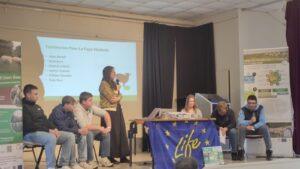
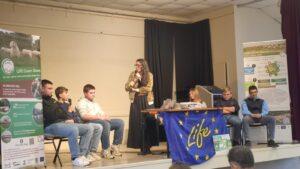
Six first-year vocational students from the Saint-Yrieix-la-Perche high school then took the stage, most of them farmers’ children, some from non-farming backgrounds. All want to set up as sheep farmers.
- What they already see: summers without grass, tree branches and leaves fed to ewes, abortions linked to heatwaves, exhausted animals.
- What works at home: rotational grazing, which gains about fifteen days, lucerne that holds on when everything else is burnt, new crops (barley, forage rape, maize, sorghum, millet).
- What they would like to try: barn drying, more grassland and stocks, better-ventilated buildings, more precise equipment, diversification and direct sales.
- What they asked the audience for: references on the nutritional value of new forage crops, technical follow-up for their flock, support to set up their farm, and genetics for hardier ewes.
The Chairman of Interbev’s sheep section, Patrick Soury asked them how they talk with their parents: bringing new ideas without making animals suffer or changing everything at once and Laurent Reversat, representative of the french dairy sector congratulated them for their vision and their words.
PRESENTATION : 4_Teaching and training of future generations
Other European projects. Speakers from related projects (climate advisor and demonstration farm networks, LIFE Carbon Farming) shared their lessons: engage farmers rather than enrol them, harmonise data, and rely on farmer-to-farmer learning. They also stressed that a still slow carbon market calls for several funding sources, including upfront funding. For several of them, adaptation is the easiest way in when talking to farmers.
The map of European projects bridging research and advisory work on climate-smart farming.
Five lessons from networking and the survey: partnerships, skills and methods, stakeholders, rewards, capitalisation.
PRESENTATION : 5_Outlook and complementarities with other European projects
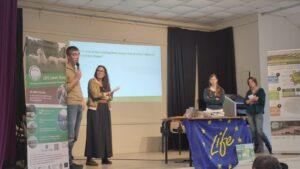
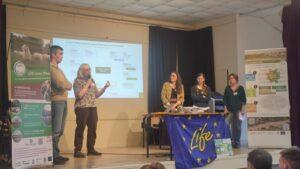
The sectors’ conclusion. Laurent Reversat (FBL) and Patrick Soury (Interbev) concluded on behalf of the sectors. The first said he had been sceptical at the start, but is now convinced that assessments and action plans add value to the job of both farmer and advisor: the more efficient you are, the more you cut emissions and the more you save. Two challenges ahead: gaining recognition for the services provided by grass-based livestock farming (grassland, wildfire prevention), and having enteric methane accepted as necessary to produce food, without giving up on reducing it. The second welcomed the achievement of the net footprint target, stressed the importance of technical support, and preferred to speak of «evolution» rather than «change» so that farmers listen. His watchword: produce more, for food sovereignty, and produce better.
Sindy Throude (Idele) and Caroline Guinot closed the morning with four words: farmers first, evidence, together, action. A summary film of the project was shown in English and French.
The conclusion in a few words: efficiency, ownership, technical support.
Wednesday afternoon: Le Mourier farm (CIIRPO)
The seminar ended at CIIRPO, the sheep technical centre based at the Le Mourier experimental farm in Saint-Priest-Ligoure. The centre runs its trials on several flocks, including about 250 ewes dedicated to a system monitored over the long term. It welcomes around 1,000 visitors a year and works with about twenty agricultural high schools and chambers of agriculture. Its themes: grazing, forage production, protein self-sufficiency and simpler work. An agrivoltaics demonstrator of just under one hectare is due to be installed there in 2027.
After a presentation in the barn, participants attended four 25-minute workshops, chosen from:
- Ovicarbone, a low-carbon system: six technical levers tested on the experimental flock. Grouped lambing brought forward by about fifteen days, earlier turnout to grass, grazing on neighbouring farms, forage rape sown in spring to finish lambs. Result: two years with 100% of lambs finished on grass without concentrate; autumn mating gave slightly lower fertility but higher prolificacy.
- Reducing dependence on inputs: trials on the amount and form of concentrates for lambs (rationed at 600 g a day during fattening instead of ad lib), earlier haylage for richer forage, and savings from choosing the best forage (€10 per twin-bearing ewe over lactation). Discussions also covered costs and spreading sales over time.
- Forage diversification: summer catch crops, fodder beet strip-grazed (very high in sugar, but leaves damaged by the July-August drought), and silphium, a perennial plant harvested for the first time as haylage in June 2026. Silphium stayed green when everything else was burnt, but its feed value drops after flowering. These crops are best suited to ewes on maintenance rations.
- Landscape, biodiversity and ecosystem services: CAP’2ER now includes indirect biodiversity indicators (hedge density and connectivity, ponds, woodland edges), complemented by the Biotex tool. Open land maintained by flocks, hedges and grassland host useful wildlife, from swallows to soil micro-organisms, and limit erosion. Companies are increasingly interested in biodiversity among their suppliers.
- Measuring albedo: how much sunlight grassland reflects, a way to better account for its effect on the climate.
- Precision livestock farming: a weighing and sorting crate, and a six-camera set-up that takes a 3D image of each ewe at every weighing, to test technologies suited both to daily farm work and to experimental measurements.
One message came up in several workshops: a practice that takes too much working time will not be adopted by farmers, however good it is for the climate.
Key takeaways
- The target is met for the net footprint (-28.7% for dairy, -12.4% for meat), thanks to carbon stored in grassland and hedges. The gross footprint fell less, held back by external factors (bluetongue, 2023 forage) and a three-year period that was too short.
- Technical efficiency is the first lever: fewer lamb losses, better feeding, more self-sufficiency. It improves both environmental performance and income.
- Advice is the key: an assessment only makes a difference when a trusted advisor explains it, links it to economics and follows it with an action plan.
- Communicate, pass on knowledge, keep going: this is the priority participants set themselves, with clear needs for funding, simpler tools and recognition of farmers’ work.
- The young generation is ready: future farmers already see climate change on their farms and ask for references, follow-up and support to set up.
Open questions: who will fund the assessments after the project? Should farmers be rewarded through product prices or through carbon credits? How can extensive systems and the services provided by grassland be better taken into account?
Sources: session transcripts (machine translation; quotes to be checked), seminar schedule, presentations «Introduction», «Mitigation strategies», «Lessons learnt from the project», «Teaching and training of future generations», «Outlook» and «Conclusion», flipcharts from the capitalisation workshop